Gender Stereotypes
Dennis Agyapong
Interpersonal Communication
Professor Whitney lles
January 18, 2020.
In this assignment of “Gender Stereotypes,” I have collected five different advertisements, and I have analyzed them in terms of gender stereotypes. These below are the advertisements and their corresponding analysis.
- First gender stereotype advertisements and its analysis.
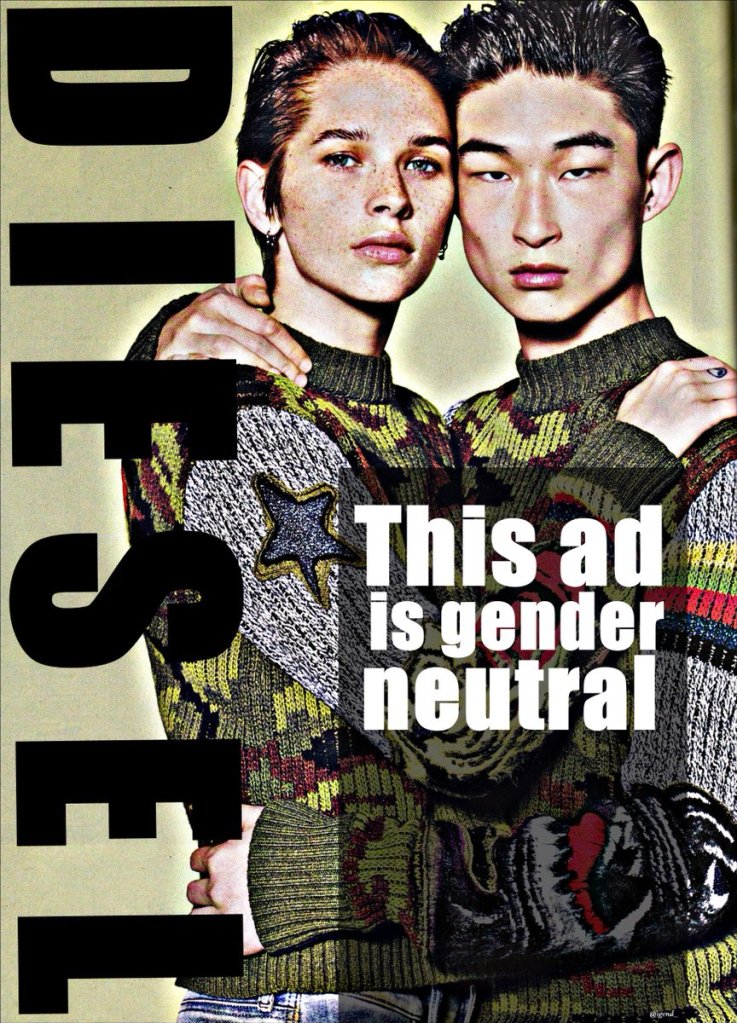
This is my first gender stereotype advertisement. This advertisement is from the Diesel brand and is about clothes fashion. There was a lot of this kind of advert, but I selected this one for my gender stereotype analysis.
This advertisement reflects a gender stereotype towards both men and women. It is a neutral gender stereotype advertisement. From the above picture, you will see the brand name Diesel, see both woman and a man, they are wearing the cloth top with the same colors. These show that the brand Diesel produces that kind of clothes for both men and women, and they can equally have their choice in the brand’s store.
- The second gender stereotypes advertisement.

This is my second advert for gender stereotypes analysis. This advertisement is about fashion sports shoes. This advert is one of the gender stereotypes for a female when I was searching.
This advertisement reflects the gender stereotype of women. In the above advert picture, you see a woman, a sports shoe and some written showing that the shoe is approved by the woman and she is confidently advertising for the shoe. She is advertising for women to patronize the sports shoe and its gender stereotype towards women.
- Third gender stereotype advertisement.
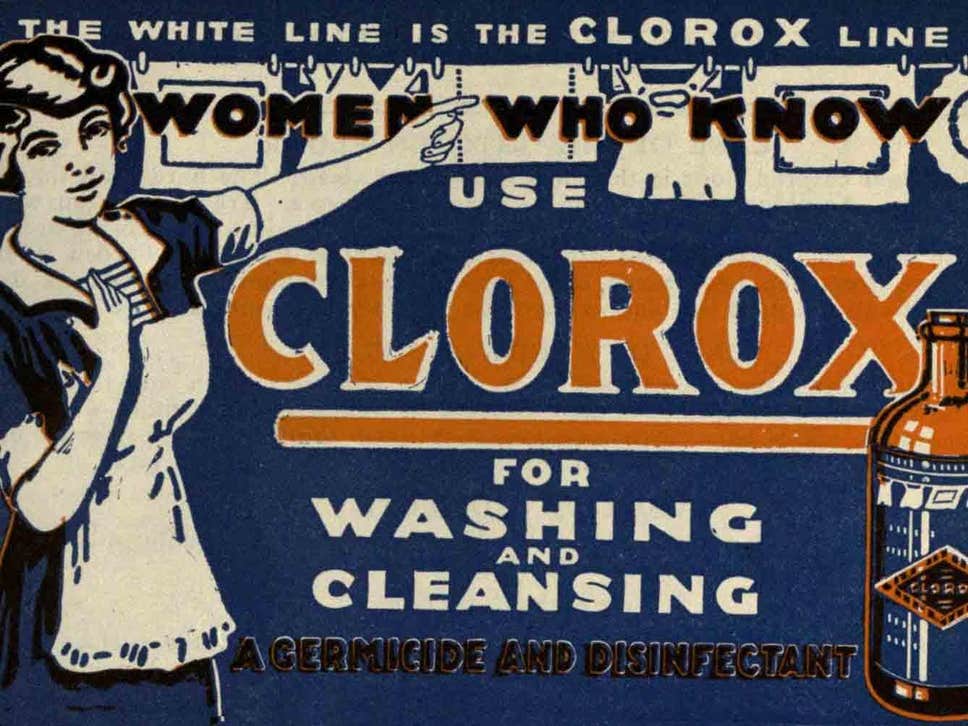
This is my third gender stereotype advertisement. This is a product of Clorox and it is about washing and cleaning detergent advertised on some years ago. This is one of the product adverts focused on women.
In the image above, you see a woman with a cleaning dress, a bottle of Clorox, a written “women who know use CLOROX for washing and cleansing” on the image. This advertising reflects the gender stereotype towards women. This advert focused on women because they thought washing and cleaning are for women only, and they thought women know the best when it comes to cleanliness. Again, they targeted women and I think now things have changed and both genders can do it better, as compared to the olden days ideas towards women.
- The forth gender stereotype advertisement.
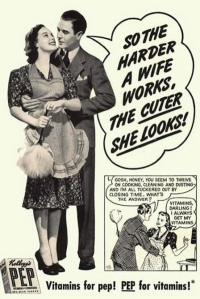
This advert showing an image of man and woman. It also has written “SO THE HARDER A WIFE WORKS, THE CUTER SHE LOOKS! The arrow of the words indicates they were communicating with each other. The advert happens in the old era. This advert reflects on gender stereotypes towards both men and women.
The above image implies that in the olden days, women were only good at handling household activities such as cooking, cleaning, and men were also supposed to work outside to provides money for family needs. Again, it showed that women felt happy when they work only at home, which also reflects the gender stereotypes towards women.
- The firth advertisement.

This is the firth and the final gender stereotypes advertisement. The advertising is from the company “Love Essex”. This is an advert encouraging people to keep their streets clean. The images above show a man and a woman, and both holding trash, ready to put into a dustbin. This advertising reflects gender stereotypes for both men and women in the community. It also tells both genders to be responsible in their communities when it comes to cleaning.
The other issue is counter gender stereotypes towards women from men on the images shown in the advertisement. It stated on the woman’s side “it’s a pretty quick thing to do” whiles a written on the man side “it’s the smart thing to do.” From the advert, the word “Pretty” was used for women, and “Smart” was used for men. This means that a woman can be pretty but cannot be smart. This indicates a counter gender stereotype against women. it might sound alright if the man’s pictures didn’t appear next to the woman’s picture on the image.
The above are my five internet-based advertisements and their analysis of gender stereotypes. Thank you.
 Dennis Blog